
One gold box. One gold box with a red bow and a bunch of homemade cookies inside can serve to remind us of both—on the one hand—fire and passion, and—on the other hand—comfort and compassion. Because more than one thing can be true at the same time.
Have you heard that saying? I spent some time this week trying to trace the popular aphorism back to its source. Many attribute it to F. Scott Fitzgerald, who wrote that “intelligence is the ability to hold two opposing ideas in the mind at the same time, and still… function.” Other people attribute the idea to GK Chesterton, and others still to the thinking of Emanuel Kant or Niels Bohr. Myself, I tend to think that the Apostle Matthew beat them all to the punch. “Go into the village ahead of you,” said Jesus, “and immediately you will find a donkey tied, and a colt with her; untie them and bring them to me.”
I still don’t have any idea about how Jesus got to Jerusalem riding humbly on a donkey and also on a colt, but Matthew didn’t seem troubled by the apparent contradiction. Actually I think he constructed the apparent contradiction on purpose—I’ll get to that shortly—but let me invite you to enter the holiest week in the Christian year with openness to thinking dialectically. That is, to holding multiple truths in tension.
Confession time. I took the risk of smoothing over some of the constructed contradictions by which we typically begin Holy Week, because today we are observing Palm Sunday but not Passion Sunday. We won’t hear the long recitation of the Passion Gospel today, and we won’t leave the church in silence and go home anticipating grief. Not because silence and grief are not appropriate to Holy Week. They are essential parts of the story. But if you choose to follow Jesus’ journey day by day, you’ll remember that the grievous events happen later in the story. If you are missing them right now, I assure you that we’ll be reading the entirety of the Passion narratives on Thursday and Friday.
But first, we meet Jesus arriving in the ancient holy city surrounded by friends and celebrated by the onlookers as a long-awaited savior. He’ll spend the next few days teaching and arguing—rabbinic-style—and healing and celebrating the Passover. That is, the annual ritual by which the Jewish people remember God’s action in freeing them from slavery in Egypt. Except that they weren’t really free in first century Judea.
At the very same time that Jesus and his motley crew of disciples were making their palm-adorned way from the Mount of Olives to the eastern gate of Jerusalem, the imperial cavalry of Pontius Pilate was entering from the west. They marched through the city gate in military formation, mostly to remind the Jews gathering in occupied territories that—just because God had liberated them from a previous empire—the Romans were still firmly in control.
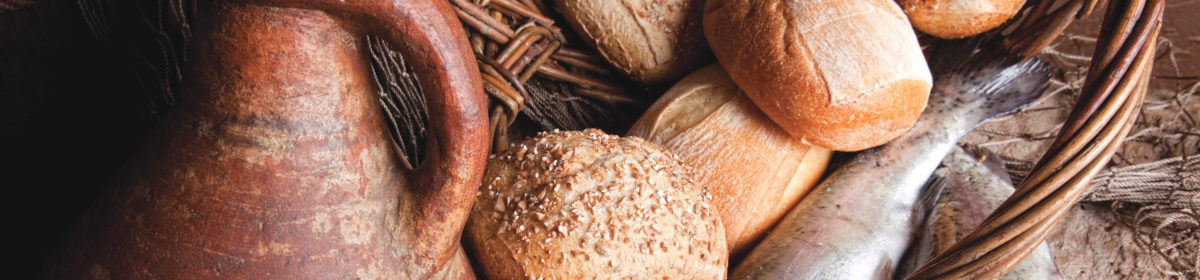
And this is the central contradiction of Holy Week. A colonial superpower flexing its military muscles, running headlong into an enthusiastic band of God-dreamers imagining a world of mutual care and bread and fish and wine enough for all. What could possibly go wrong? If you don’t know, feel free to come back to church on Thursday and Friday. And if you want to know how God still made it right, come back again on Saturday and Sunday.
But for now, I leave you with the unease of contradiction, and with the hard work of recognizing multiple truths. I leave you with the curious image of conveyance by donkey and colt—themselves symbols of the competing power of peasants and princes—and of a symbolically red ribbon-topped box filled with the warmth of homemade cookies inside. I leave you with the contemporary image of Minneapolis residents, organizing meals and care for immigrants while armed federal agents shot and killed US citizens. I leave you with the Episcopal Church in Jerusalem, providing almost all of the education and health care still available in the embattled Palestinian territories. I leave you with the image of now Archbishop of Canterbury Sarah Mullally boldly knocking on the door of Canterbury Cathedral, historically the seat of a male-only club. More than one thing can be true at the same time.
This Holy Week, we at Church of Our Saviour will do our ritual best to remember all the truths of Jesus’ costly final journey, and—after today’s celebration, which includes a beautiful concert—we’ll try not to flinch at the painful parts to come. Because the two processions that went into Jerusalem that fateful week are still with us now. The one that came armored with horses and chariots still wields the intimidating threat of lethality; the other that came on a donkey still offers healing love, the promise of life, and maybe even a box of cookies. And Jesus still calls us to choose.
So let me invite you this week to choose the way of shared bread, of costly compassion, and of persistent hope. Let me invite us all to listen more closely to the voice of Jesus, who calls us to choose the kingdom that does not dominate and does not terrorize, but rather gathers and blesses. And when the road leads—as it surely will—through betrayal and grief and the shadow of the cross, let us keep walking in his way anyway. Because the one who entered Jerusalem in humility and refused to return evil for evil is the one whose power will triumph in the end.
Blessed is the one who comes in the name of the Lord. Hosanna in the highest. Amen.
